Heat Exchangers
Brazed Plate Heat Exchangers
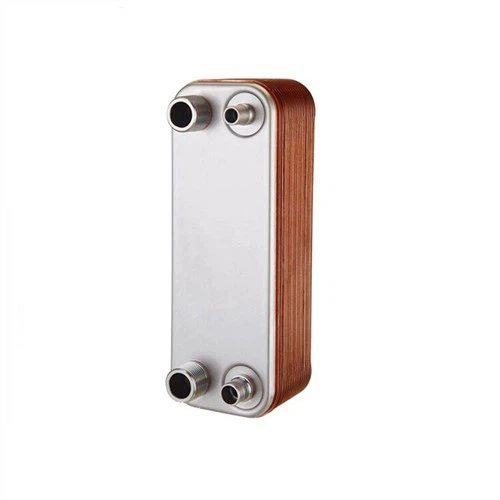
Copper or nickel brazed plate heat exchangers: compact, gasket-free and suited to high pressure...
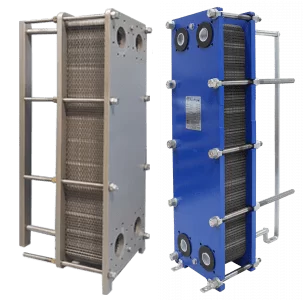
A plate heat exchanger lets two different fluids exchange heat without touching each other: one side heats while the other cools. Gasketed plate exchangers are used in industrial and hygienic applications to meet a given temperature and capacity. Plate material and gasket type change with the fluid; stainless steel, titanium and nickel alloys are used depending on the corrosion resistance required.
The gasketed plate exchanger is known for its energy efficiency, compact design and effective heat transfer. It is widely used for heat transfer in industry, and in hygienic sectors such as food and pharmaceuticals it is chosen because it meets strict hygiene requirements.
Corrosion resistance is the main factor in material selection. Stainless steel plates are ideal for general industrial service; AISI 316L and AISI 304 are frequently chosen for their high corrosion resistance and mechanical strength. Titanium plates are used where high temperature and corrosion resistance are required, and nickel alloys stand out for corrosion resistance and high temperature tolerance.
Gasket selection depends on the fluid properties and the temperature conditions. EPDM, NBR and FKM (Viton) are the common gasket materials; EPDM performs well with water and steam.
Main parts:
Tell us the line pressure, fluid type and temperature; we will work out the right model and its alternatives with you.
Copper or nickel brazed plate heat exchangers: compact, gasket-free and suited to high pressure...
Shell and tube heat exchangers for steam, thermal oil and dirty fluids, with a removable tube b...